Gone are the days when shoppers solely relied on Google to compare product prices or read reviews. Today, AI is dominating the scene, with tools like ChatGPT and Perplexity evolving beyond simple assistants, now influencing what people buy and which brands they trust.
What does this mean for your business’s current SEO strategy? Let’s explore Google’s standing in the product search landscape, the implications of AI product discovery, and how marketers can respond to these changes.
Is Google Still King of Product Search?
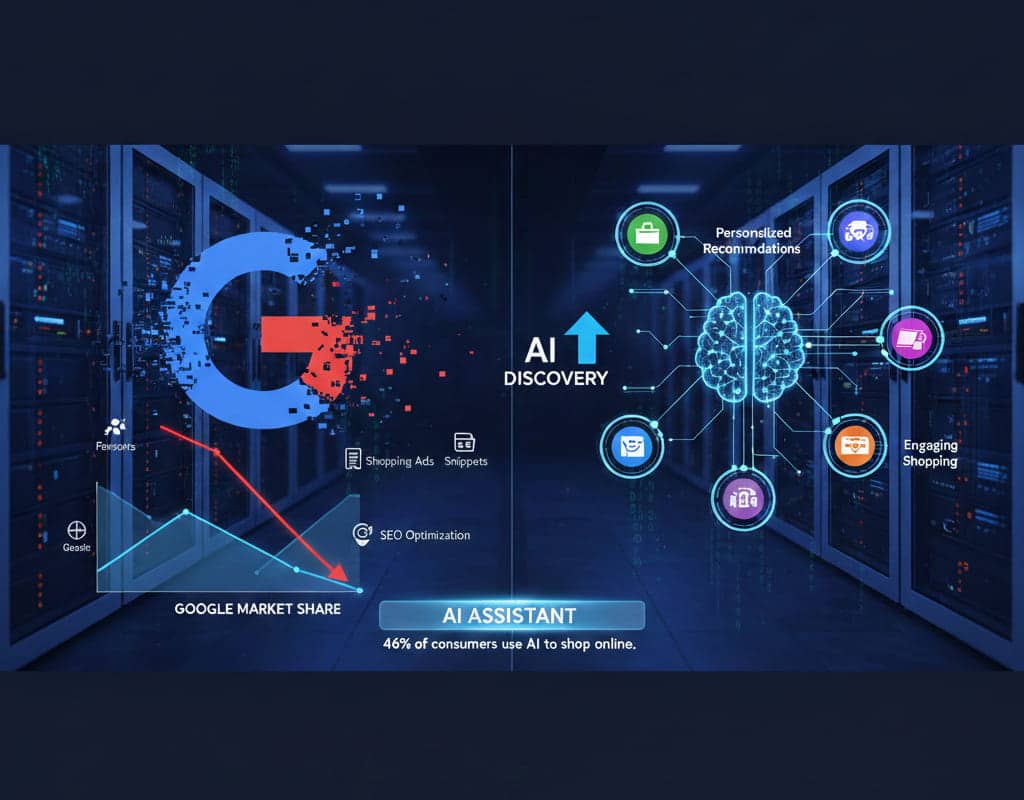
For the past decade or so, Google’s market share in product discovery has shaped the entire purchase funnel. This is possible through its integrated shopping features, review snippets, and paid campaigns—areas where SEO experts have been optimizing for years.
The growing popularity of AI challenges this status quo. AI assistants and conversational search now offer highly personalized product recommendations even before users land on a website. In turn, Google’s role has moved from being the primary point of discovery to just one of several possible touchpoints.
This shift is very evident in user behavior. A collaborative study from the Interactive Advertising Bureau (IAB) and Talk Shoppe revealed that 46% of consumers use AI to shop online for various reasons, including:
- AI anticipates their needs
- AI provides personalized recommendations
- AI makes shopping more engaging and enjoyable
These are characteristics that traditional search would find difficult to beat. Sure, roughly half of shoppers still use Google to find new items, but it’s no longer the biggest player in the game.
AI Is Changing How People Discover Products
Product discovery is becoming less about keywords or search terms and more about conversations.
Users now ask full, conversational questions, either by typing or speaking. This format gives AI tools a deeper understanding of context and preferences, enabling them to present curated recommendations rather than a list of links, thereby reducing consumers’ mental workload.
These changes are especially prevalent among digital natives, especially Gen Zs. Around 61% of this generation have used AI to assist with their purchases, with 25% doing so regularly. Shoppers rely on it to summarize reviews, compare options, and recommend products.
In effect, product visibility is no longer solely dependent on rankings, but on whether a brand’s web content is accessible and valuable enough for AI systems to reference.
Google’s Response: Search Generative Experience (SGE)
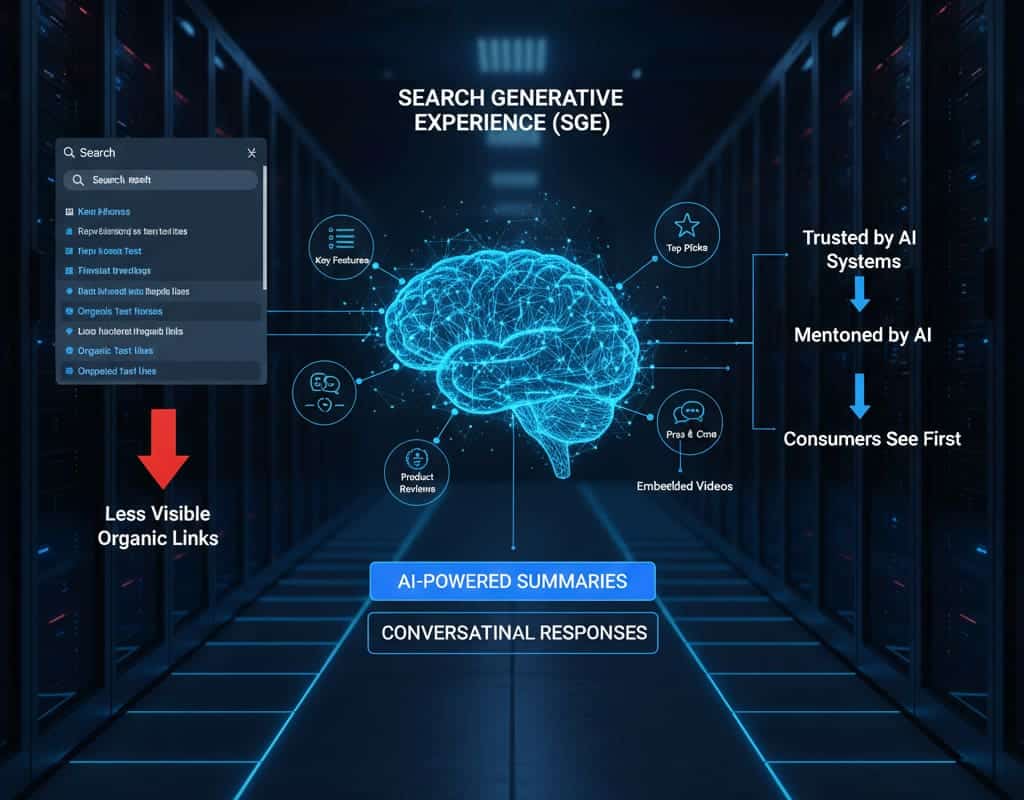
Despite these changes, Google is doing its best to keep up by developing the search generative experience (SGE). These are AI-powered summaries that appear within search results. They generate conversational responses that derive information from authoritative sources, helping users find products, compare options, and make decisions without leaving the SERP.
Depending on the search terms, an SGE may include these details:
- Key features
- Top picks
- Pros and cons
- Product reviews
- Embedded videos about a product
The challenge with SGEs is that they take up a lot of screen space, meaning organic links become less visible. Since SGEs provide comprehensive information, users are less likely to scroll down and click on individual results—even on high-ranking pages.
The development of SGEs makes it clear that Google’s goal is to transform search from rudimentary link retrieval to AI-driven conversations. In other words, SEO has become about being trusted and mentioned by AI systems that increasingly decide what consumers see first.
What This Means for Your SEO Strategy
As generative AI and SEO become more intertwined in product discovery, your SEO tactics should evolve beyond the traditional. Let’s discuss some Google SEO strategy changes you can implement to keep up.
Keyword Intent Over Volume
The presence of high-search-volume keywords in content is no longer a reliable indicator of content relevance. AI systems prioritize user intent and context, which means you must specifically address users’ problems and where they are in the buyer’s journey.
In SEO, your strategies should revolve around long-tail queries mirroring how users converse with AI assistants. For example, product descriptions need to address highly specific use cases and comparisons rather than rely on generic keywords to improve their visibility in AI search.
Structured, Trustworthy Content Wins
Proper content structuring has always been important for SEO. However, it matters now more than ever. Your pages should be easy for AI systems to scan and understand, increasing the chance they will be referenced. Here are some pointers to keep in mind:
- Logical heading hierarchy
- Descriptive headings
- Bullet points
- Schema markup
At the same time, experience-expertise-authoritativeness-trustworthiness (EEAT) principles have become nonnegotiable. AI tools won’t simply reference any page. They want well-written and well-sourced content.
AI Readable Formatting
It’s easier for AI systems to comprehend clear and direct content. This means you’ll have to shift away from long, unfocused paragraphs. Instead, utilize short sentences, precise definitions, direct FAQ answers, and comparison tables to make your page easily quotable.
Omnichannel SEO Is Now Essential
Staying relevant in Google has become more challenging. As such, your SEO strategies shouldn’t be confined to this platform alone. It’s become crucial to leverage social media, online marketplaces, and other channels to expand your reach.
TikTok is a good place to start, as it’s where countless brands find their target audience. With over 150 million users in the U.S. alone, 30% have purchased something on TikTok Shop, making it a fundamental part of a sound omnichannel SEO strategy.
You may also expand into e-commerce platforms like Amazon, build business pages, and run ads on social media, such as Facebook, Instagram, and X.
The Future: Coexistence, Not Collapse
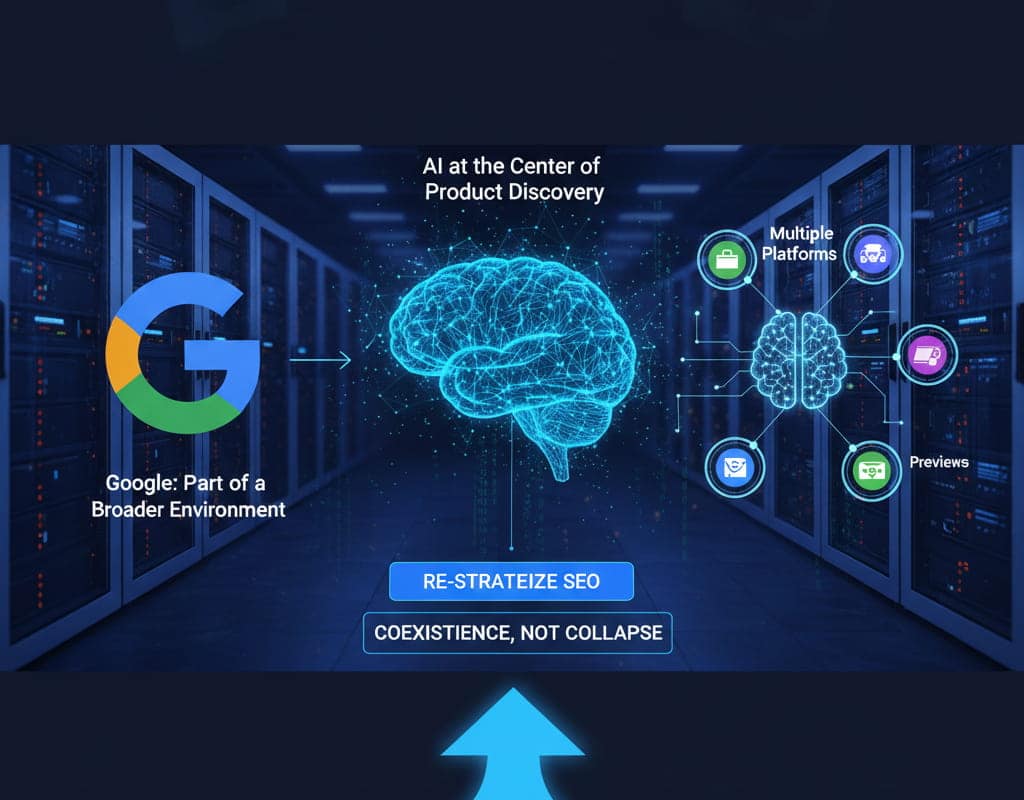
Don’t fret—Google is not becoming obsolete. After all, searching online is embedded in consumer habits. Rather, this development simply suggests viewing Google as now a part of a broader product discovery environment, which has AI at its center so far.
Product and brand visibility now depend on building EEAT on multiple platform that aligns with how users actually research and compare products. So, your goal should not be to choose between AI vs. Google, but rather to re-strategize your SEO in a landscape where both coexist.
Suffice to say, the future of search engines in AI product discovery is bright.
Frequently Asked Questions
1. Are AI tools really taking market share in product discovery from Google?
Yes, although they aren’t replacing Google outright. AI tools like ChatGPT, Perplexity, and Gemini now influence product research and recommendations, removing Google’s role as the sole starting point for product discovery.
2. What is Google’s Search Generative Experience (SGE)?
SGE is Google’s AI-powered feature in SERPs that generates conversational summaries of information from various sources.
3. How should I adapt my SEO strategy for AI-driven discovery?
Shift your keyword strategy to user intent, create structured, AI-readable content with EEAT, and maintain brand presence across multiple platforms beyond Google.
4. Will AI eliminate the need for SEO?
No. Rather, AI is evolving SEO strategies. Maintaining organic search engine visibility is still crucial to ensure your website is discoverable and credible—characteristics that encourage AI systems to reference it.
5. What content performs best in AI-powered product discovery?
Content that is clear, trustworthy, well-structured, and driven by user intent performs best.
The AI Landscape is Expanding
Remember, AI search should only complement and improve your existing SEO tactics, not completely replace them. Be sure to adapt your digital strategies as soon as possible to take advantage of the opportunities of this new landscape.
Marketing Done Right is ready to help you navigate these changes and stay ahead of the curve. Contact us today to find out how we can assist in enhancing your SEO and AI product discovery strategies!